Electric label dispenser machine Canada
23rd Nov 2026
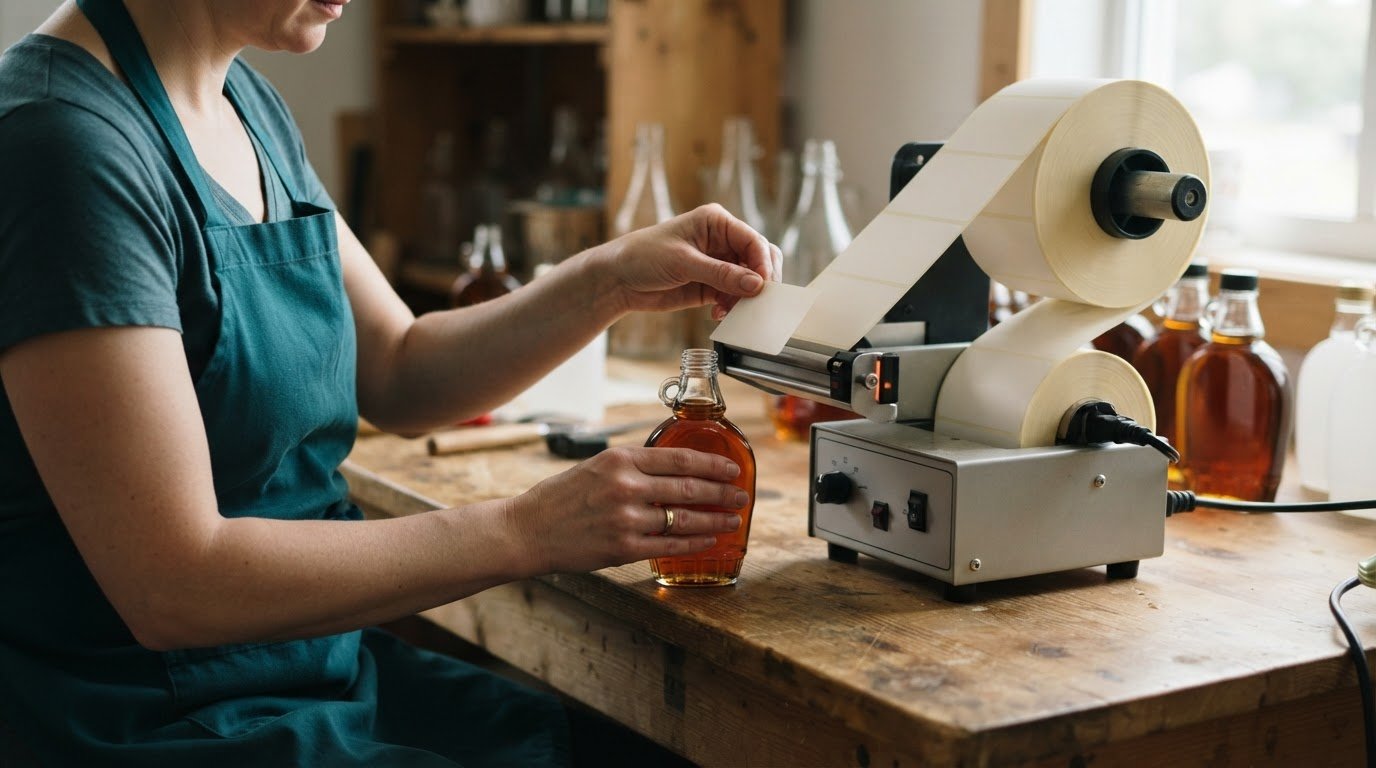
Finding the right electric label dispenser machine in Canada starts with matching the equipment to your label stock. Some automatic dispensers support labels 5-140 mm wide and peeling lengths of 10-150 mm, but compatibility depends on the model. Matching those dimensions before comparing machines can help prevent avoidable workflow issues.
Choosing an electric label dispenser machine in Canada means balancing speed with available workstation space and the demands of your labelling process. A faster unit may not be the right fit if its dimensions, label capacity, or operation do not suit your setup.
This guide explains how to compare compatible label widths and lengths, dispensing speed, machine dimensions, and weight. It also covers what to review in pricing and package contents, so you can assess the complete setup rather than focus on one specification. With these details in mind, you can narrow your options to a dispenser that fits your labels and daily workflow.
Key Takeaways
- Match the dispenser’s supported label width and peeling length to your stock before narrowing your options.
- Compare dispensing speed, listed at 1-8 m/min for an automatic dispenser, with the pace of your labelling workflow.
- Consider the machine’s footprint and weight to make sure it suits your workstation and can be positioned comfortably.
- Check roll compatibility and counter features to understand how a dispenser may fit into your routine.
- Review pricing alongside package contents so you can compare what each option includes, not just its listed cost.
Compatible label lengths and widths
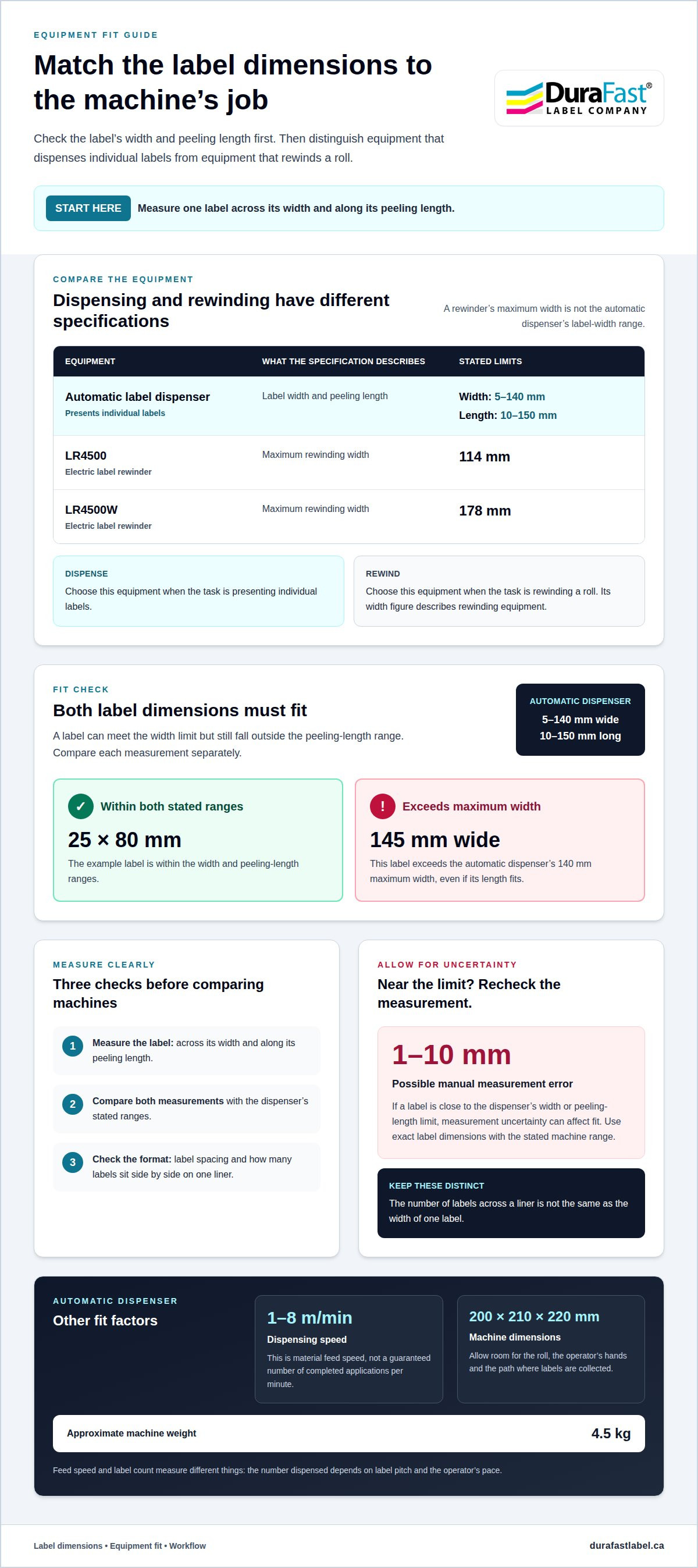
Start by matching the label dimensions to the dispenser’s supported range. An automatic label dispenser supports labels 5-140 mm wide and peeling lengths of 10-150 mm. Both measurements matter: a label may fit the width limit but still fall outside the peeling-length range. Compare the label face dimensions with the machine’s stated limits before selecting equipment.
Width describes the label across the feed path; peeling length describes the label dimension presented for dispensing. A narrow, long label and a short, wide label place different demands on the dispensing path. For example, a label measuring 25 mm wide and 80 mm long sits within both stated ranges. A label 145 mm wide exceeds the automatic dispenser’s maximum width, even if its length fits.
Use these checks to narrow the fit:
- Measure one label across its width and along its peeling length.
- Compare each measurement with the dispenser’s 5-140 mm width and 10-150 mm length ranges.
- Check the product format and label spacing, especially when several labels appear across one liner.
Format matters as much as size. Some manual dispensers can present four or five different small labels side by side. That can suit a workstation handling several label types, while an automatic dispenser’s stated range focuses on each label’s dimensions. Distinguish the number of labels across the liner from the width of a single label.
Don’t confuse a dispenser’s capacity with a label rewinder’s maximum width. The LR4500 electric label rewinder has a maximum width of 114 mm; the LR4500W electric label rewinder supports up to 178 mm. Those specifications describe rewinding equipment, not the 5-140 mm range for the automatic dispenser. Selecting between devices starts with the task: dispensing individual labels or rewinding a roll.
Application-specific labels can also have different formats. For example, card grading labels are a distinct use case, so their dimensions should be matched to the dispensing equipment rather than assumed to fit. Label shape, liner presentation, and the way each label peels all affect practical compatibility.
Warranty coverage, shipping terms, and return options vary between Canadian suppliers and equipment listings. The written terms for a specific order determine the applicable coverage, delivery arrangements, and return conditions.
Finally, allow for measurement uncertainty when reviewing a product listing: manual measurements may have an error of 1-10 mm. If a label sits close to the dispenser’s width or peeling-length limit, that margin can affect fit. Use the exact label dimensions and the stated machine range together, rather than relying on a rough size description.
High-speed electric dispensers
An automatic label dispenser has a dispensing speed of 1-8 m/min. That range describes label material moving through the machine, not a guaranteed number of completed applications per minute. To compare speed meaningfully, relate the feed rate to your labels, the spacing between them, and how the operator collects each dispensed label.
Linear speed and label count measure different things. A roll advances by distance, while each label takes up part of that distance, with gaps between labels on the liner. As a result, the number dispensed in a set time depends on label pitch, not speed alone. Two jobs using the same dispenser can produce different label counts at the same feed rate.
Use this practical comparison when assessing a stated speed:
- Identify the measurement: confirm whether the figure describes material feed in metres per minute or labels dispensed per minute.
- Consider the task: distinguish dispensing labels for hand application from feeding labels into another step.
- Compare typical work: evaluate performance using the label format and workflow that the machine will handle.
- Allow for operator pace: the dispenser can present labels quickly, but a person still needs to remove and apply them.
The 1-8 m/min range gives a useful starting point, but the top figure isn’t automatically the best choice. A fast feed may suit a process that can accept labels continuously. A slower setting may be easier to manage where someone applies each label by hand. The right operating pace is the one that keeps dispensing aligned with the next step, rather than creating a queue of labels.
For a fair comparison, consider how the dispenser performs throughout the work cycle. The operator may need time to lift a label, position it, apply it, and return to the dispensing point. These actions affect completed output even if the machine’s feed rate remains constant. A steady work rhythm can matter more than choosing the highest advertised speed.
Record the job’s usual label format and application method, then compare them with the listed speed range. This helps distinguish a useful operating rate from a headline specification. It also shows whether the process calls for continuous feeding or controlled presentation for applying labels by hand.
If you’re assessing a dispenser for a specific workflow, discuss your dispensing requirements as part of choosing a suitable setup.
Dimensions and weight
An automatic label dispenser measures 200 × 210 × 220 mm and weighs about 4.5 kg. Those figures help estimate its workstation footprint and whether it can be repositioned easily. Treat the three dimensions as separate measurements, not as the width of the label path. Keep room for the roll, the operator’s hands, and the path where dispensed labels are collected.
Other electric dispensers are described by their width, which helps compare equipment with limited bench space. The LD3000 is 57 mm wide, while the LD8025 is 127 mm wide. The LDX8025 measures 203 mm wide. These figures describe width only, so they don’t establish the machines’ full footprint or weight.
Additional models show why it’s useful to compare the exact name and dimensions:
- LD6050: 121 mm wide.
- LDX6050: 178 mm wide.
- LDX6025: 178 mm wide and described as suitable for long labels.
- LAP65-30: a manual handheld applicator, 30 mm wide.
- LAP65-60: a manual handheld applicator, 60 mm wide.
These widths don’t make the models interchangeable. For example, a 178 mm-wide LDX6025 and a 178 mm-wide LDX6050 share a listed width, but the specifications identify different models. Use each machine’s full model name when comparing dimensions, and keep the stated purpose of the LDX6025 in view.
For a workstation check, measure the surface available in front of and beside the dispensing point. Then compare those measurements with the machine’s listed dimensions. A 200 × 210 × 220 mm unit needs space in three directions, while a model listed only as 127 mm wide still needs depth and height allowance. Include room for the operator to reach the label and load the roll.
Weight affects placement and movement. At about 4.5 kg, the automatic dispenser’s listed mass gives a practical reference for moving that unit between work areas. The listed widths for LD3000, LD8025, and LDX8025 help assess side-by-side placement, but don’t provide their weights. Avoid treating one model’s weight as representative of another.
Finally, separate machine dimensions from roll dimensions. The dispenser body occupies bench space; the mounted roll and label path also need clearance during use. Check the exact model’s full measurements and weight against its intended position, especially when comparing an electric unit with a handheld LAP65-30 or LAP65-60 applicator.
Electric label dispensers
An automatic dispenser can accept rolls with a 25-75 mm inner diameter. Its automatic counter ranges from 0-999999, which can help track dispensing activity.
Electric and Manual Dispenser Comparison
Electric dispensers advance labels automatically, while manual dispensers rely on the operator to feed or present each label. The choice depends on whether consistent feeding or hands-on control better fits the job. Some hand-operated bottle and cylindrical product applicators can label 25 to 30 products per minute with a good operator.
That manual rate is a useful comparison, not a direct equivalent to an electric dispenser’s feed speed. The electric model’s 0-999999 counter tracks label dispensing, while a manual applicator’s output depends on the operator and product handling. Consider whether your process applies labels by hand, handles cylindrical containers, or needs labels presented continuously.
Roll fit also matters for electric operation. The automatic dispenser accepts rolls with a 25-75 mm inner diameter. A roll outside that range won’t match the stated core-size specification, regardless of the counter range or dispensing method.
For Canadian use, treat electrical approval as a separate selection criterion. Choose equipment with an approval mark accepted for the installation jurisdiction and workplace. Dispensing features alone do not establish electrical suitability.
Maintenance and Troubleshooting
Routine maintenance starts with the label path and roll. Follow the machine’s instructions for cleaning and loading, and prevent adhesive residue or loose backing from interfering with feeding. If labels stop advancing, check that the roll is seated correctly and the liner follows the intended path.
If dispensing becomes inconsistent, inspect the sensor area and label path for debris or misalignment. Confirm that labels peel cleanly and the liner moves freely. A counter reading that does not match the work may also indicate incorrect feeding. Compare the displayed count with a short, observed dispensing run.
- Feed issue: check roll placement, liner threading, and any visible obstruction.
- Skipped labels: inspect label spacing and sensor alignment against the operating instructions.
- Unexpected count: reset or review the counter using the machine’s documented controls.
Follow the manufacturer’s operating instructions for model-specific cleaning, adjustment, and reset steps. Avoid forcing a jammed liner or changing sensor settings without guidance, as these actions can make feeding less reliable. Note the symptom, such as missed labels or a stalled roll, and record the label type and when the issue occurs.
Regular checks of the 25-75 mm roll core fit, liner path, and counter can help pinpoint common operating problems. If a dispenser continues to stop after these checks, the machine’s documented troubleshooting steps provide the next diagnostic route.
For rewinding work, the LR4500 electric label rewinder has a maximum roll outside diameter of 251 mm. Check the finished roll’s outside diameter before starting a job, since roll capacity is a separate consideration from the dispenser’s stated inner-diameter fit. Keeping the rewinder’s capacity in mind can help determine whether a roll is suitable for the intended setup and avoid assuming that core compatibility alone settles the choice.
Price and package contents
Compare electric dispensers by the complete setup, not price alone. Consider the dispenser model, compatible roll format, and items included with the purchase. A lower listed amount may cover a different package, so compare equivalent equipment and components before deciding.
For Canadian purchases, check that the price is in Canadian dollars and note what it covers. A useful comparison records the model name, included items, shipping terms, and any separately priced accessories. Keep these details together: a price without its package scope does not show whether two listings offer the same setup.
Package contents can vary by model and seller. Rather than assume a roll holder, power supply, or spare part comes standard, use the product listing or quote to identify what is included. Distinguish the dispenser itself from any label stock or additional equipment shown in product images.
Use a simple comparison table for each option:
- Model: record the exact model name and dispensing specifications.
- Included components: list each item explicitly described as part of the package.
- Separate items: note accessories or supplies shown as optional or separately priced.
- Price basis: record the amount in CAD and the package it applies to.
- Delivery details: capture the shipping terms alongside the quoted package.
This approach helps distinguish a complete working setup from a dispenser-only listing. If one package specifies a power supply and another does not, for example, do not assume they contain the same items. Compare each listing’s written inclusions instead of drawing conclusions from a photo or general product description.
Match the package to the way you will use the dispenser. A workstation that already has compatible supplies may need a different purchase scope from a new labelling station. Likewise, compare a dispenser designed for a particular roll format with the rolls planned for the job. Costs depend on the selected model and package contents, not a general market average.
Before choosing, record the model, package contents, and quoted amount together. This makes exclusions easier to spot and helps you compare equivalent options without assumptions. Keep the product name with the written list of inclusions for purchasing review.
For help matching a dispenser package to your workflow, contact the team about your label dispensing requirements.
DuraFast Label Company Canada: Dymo LabelWriter label printers
DuraFast Label Company Canada offers reliable label dispensers and compatible label printers for different labelling needs. If your priority is presenting pre-printed labels for hand application, a dispenser may suit the workflow. For printing labels at the workstation, consider a thermal desktop printer instead. VIPColor and Afinia Label Printers are also available as options for colour label printing.
Start with the task: dispensing existing labels, printing labels as needed, or producing colour product labels. Then match the equipment category to your label format and work process. This keeps your decision focused on what the equipment needs to do, rather than on a model name alone.
For guidance on the next step, contact DuraFast Label Company Canada.
Plan your next labelling step
Look beyond the dispenser itself and consider how label presentation fits into the wider process, from preparing labels to applying them at the workstation. This can help you choose equipment that supports your current workflow while allowing for future changes.
If your operation needs to print labels rather than dispense pre-printed ones, DuraFast Label Company Canada offers VIPColor, Afinia, and Primera Label Printers. The right direction depends on whether your next priority is controlled label presentation or in-house printing. For an electric label dispenser machine in Canada, bring your intended label stock and application process into the discussion so the equipment choice reflects the actual task.
Contact DuraFast Label Company Canada to discuss your label dispensing or printing needs. A clear next step can help you move forward with confidence and choose a setup suited to your operation.
Frequently Asked Questions
What types of electric label dispenser machines are available in Canada?
Canadian buyers can compare automatic electric dispensers, electric label rewinders, and manual applicators. An automatic dispenser presents labels from a roll for removal, while a rewinder collects or winds label material onto a roll. Manual applicators rely on the operator to feed or apply labels. Choose based on the task: dispensing individual labels, rewinding a roll, or applying labels directly to products.
Which electric label dispensers are best for different label sizes and roll specifications?
The best fit is the model whose supported label dimensions and roll core match your stock. For example, an automatic dispenser’s stated roll-core range is 25-75 mm, while label width and peeling length have separate limits. Also consider how the liner is presented and whether labels feed consistently. A machine that accepts the roll but not the label format won’t suit the job.
How much do electric label dispensers cost in Canada in CAD?
There is no single CAD price for every electric dispenser. The amount depends on the specific machine and package contents, so compare listings for the same equipment type and included components. Keep shipping terms separate from the equipment price, and note whether accessories or supplies are included. This gives you a clearer like-for-like comparison without relying on a category-wide estimate.
Which electric label dispenser brands and models are sold in Canada?
DuraFast Label Company Canada offers label dispensers, but the identified dispenser offering doesn’t specify a brand or model range. Models such as the LD3000, LD8025, and LDX8025 are referenced as examples with different listed widths; that reference doesn’t establish them as DuraFast products. VIPColor, Afinia, and Primera are label printer brands, a separate equipment category from dispensers.
What features should I consider when choosing an electric label dispenser?
Prioritize label compatibility, roll fit, dispensing speed, counter functions, and available bench space. Consider who will remove or apply each presented label, since operator pace affects the overall process. At a shared workstation, an automatic counter may help track dispensing activity. Review the package contents and operating instructions too, to ensure the equipment and included components suit your workflow.