Custom Jewelry Labels for Retailers
8th Nov 2026
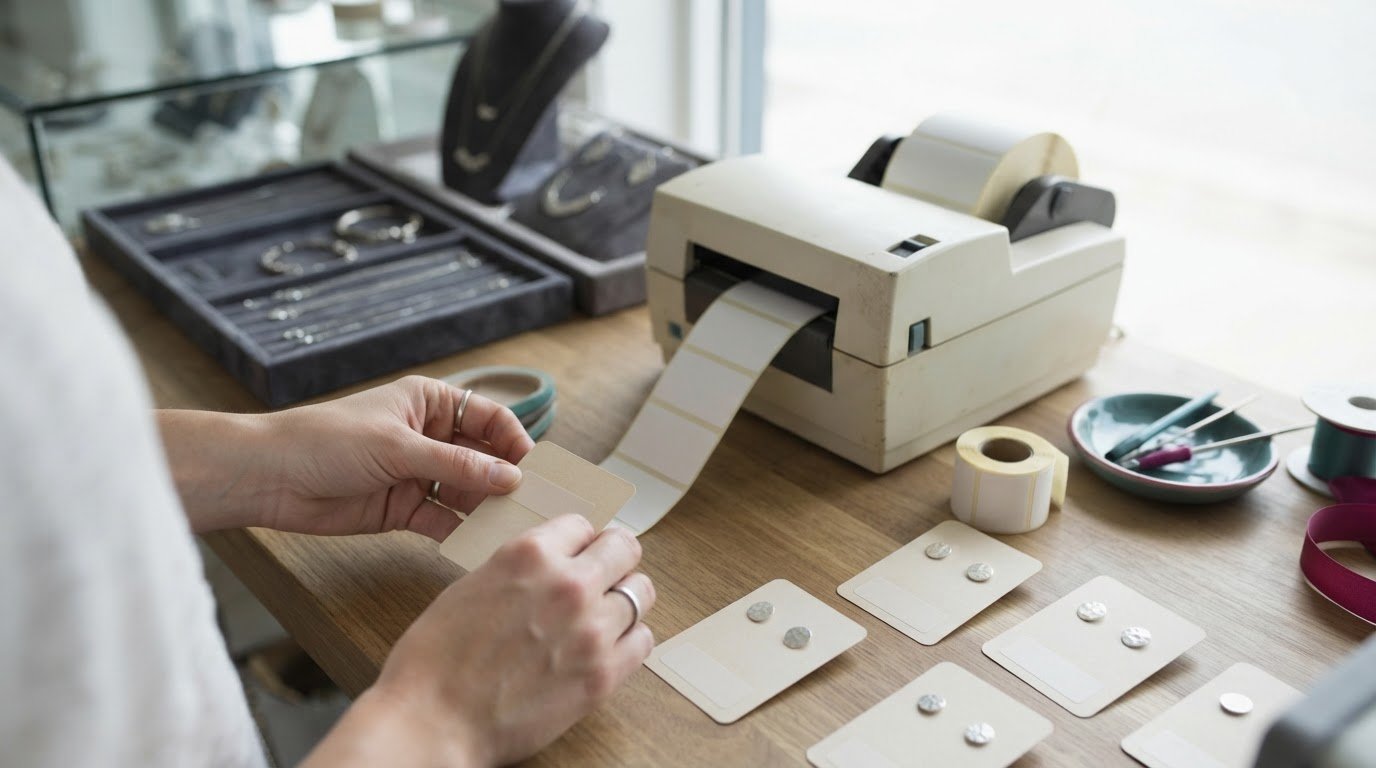
A jewelry tag can do more than show a price. Retailers use jewelry labels to identify pieces, present brand and product details, and share useful information at the point of sale. The right tag brings those details together in a format that fits the item and its display.
Choosing tags involves more than appearance. Pack quantity and price affect purchasing decisions, while size, style, and dimensions determine how well a tag fits the jewellery and presents its information. Comparing these practical details makes it easier to choose a suitable option.
This article explains what custom jewelry tags are used for, what information they can display, and how to compare pack quantities, prices, sizes, styles, and dimensions. It also covers how quality marks may appear on jewellery in Canada, helping you make informed choices about product information and presentation.
Key Takeaways
- According to the Competition Bureau Canada, a jewellery quality mark can appear on the item, a tag or sticker, or a sign or label in a display case.
- According to the Competition Bureau, a precious metal article with a quality mark must also bear a trademark applied for or registered in Canada.
- Compare tag styles and dimensions by considering how the tag will attach to the piece and how much product information needs to fit.
- Pack quantity and price are useful comparison points, but the right choice also depends on the tag’s intended use and presentation.
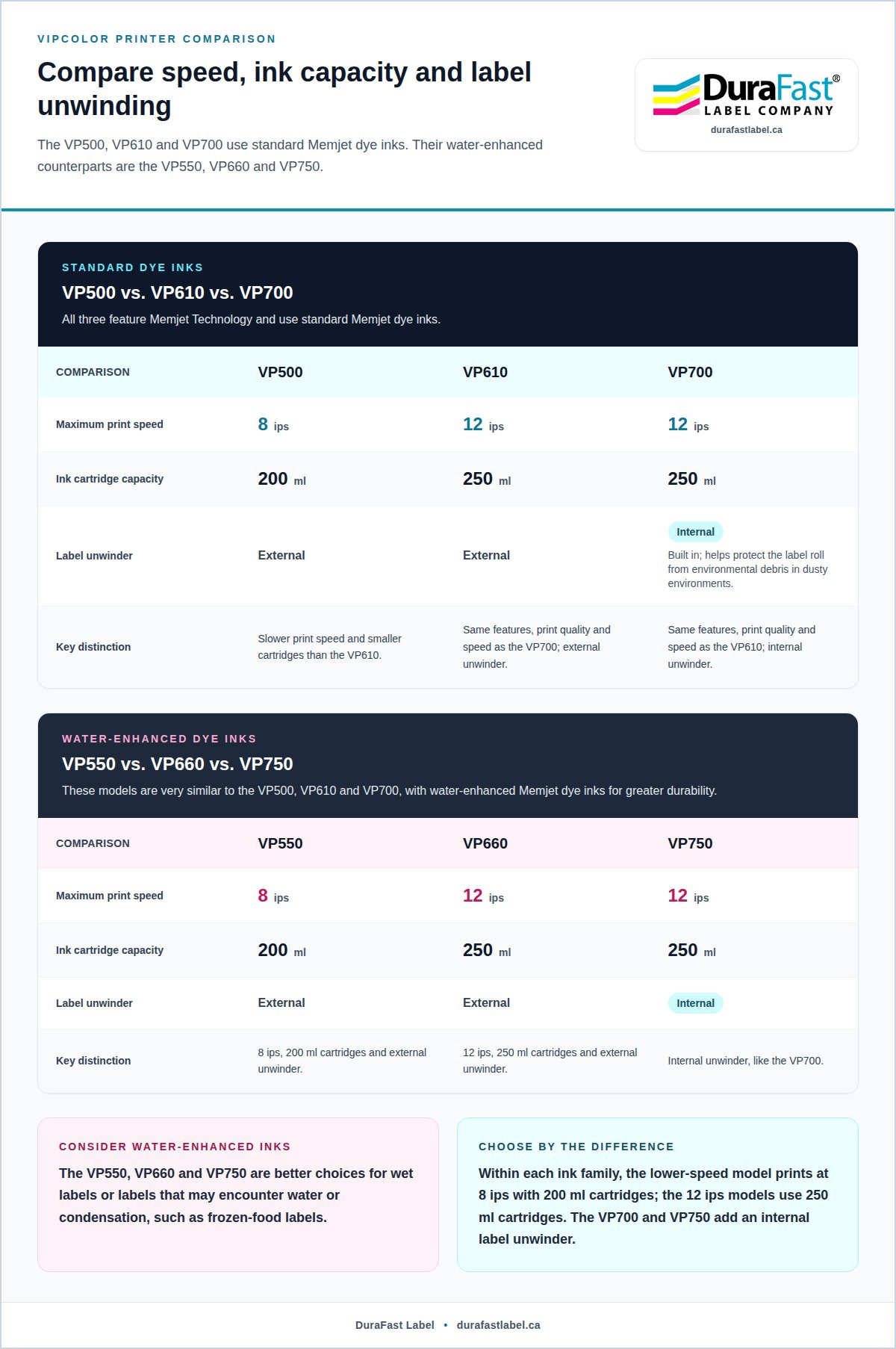
- For labels exposed to water or condensation, Memjet water-enhanced dye inks are available in the VIPColor VP550, VP660, and VP750 printers.
Branding and product information on tags
A tag can carry a retailer’s identity while helping customers distinguish one piece from another. For example, a jeweller might pair a shop name with an item code, price, or short product description. Each detail has a different role: the brand supports recognition, while the item code helps staff identify the specific piece. Choose details according to how the tag will be used at the counter and in the display case.
In Canada, a quality mark and a brand name are not interchangeable. According to the Competition Bureau Canada, a jewellery quality mark can appear on the item, on a tag or sticker, or on a sign or label in a display case. Retailers therefore have different ways to present the mark alongside a piece. A tag is one option, not the only place the mark may appear.
There is also a trademark requirement to consider. According to the Competition Bureau, a precious metal article bearing a quality mark must also bear a trademark applied for or registered in Canada. A tag can display information, but this rule applies to the article and its marks. Treat quality marks and branding as separate details when planning how the piece and its display communicate information.
For everyday retail use, organize tag content by purpose. A compact tag may need only identifying information, while a display label can carry more descriptive details. Consider examples such as:
- Brand: the retailer or maker name that identifies the source.
- Item identification: a stock code or product name staff can use to distinguish similar pieces.
- Sales detail: a price or other point-of-sale information relevant to the transaction.
- Product description: a concise material or style description, such as “sterling silver ring,” when accurate.
Keep wording concise and legible at the tag’s actual size. A long maker name, detailed description, and price may compete for space on a small tag. Prioritize what customers need to identify the item, then use a nearby display label for extra context. For example, a ring tag can carry an item code, while a case sign provides a fuller description.
Consistency also matters across a retailer’s range. Use the same order for recurring details, such as placing the brand before the product name and keeping item codes in a predictable position. This makes tags easier to scan together. Before printing a batch, review a sample beside the jewellery: check that the text is readable, the item is identifiable, and the tag does not obscure the piece.
Retailers comparing jewellery and ring labels can consider both the printed content and the point of display. A tag attached to a ring may have less room than a sign in a case, so avoid forcing every detail onto one surface. The best arrangement separates identification, branding, and supporting information without making the piece difficult to view. That approach helps custom jewelry labels serve practical retail needs while keeping product presentation clear.
Jewelry tag sizes and display styles
The right tag identifies a piece without dominating its display. A small ring and a long necklace have different attachment and visibility needs, so assess the jewellery before choosing a tag style. Consider where the tag will sit, how it will be secured, and whether customers can read it while the piece remains in its case. A tag that fits the item supports clear identification without drawing attention away from its design.
Rat-tail tags are one option for jewellery and ring marking. Their narrow, extended form is suited to wrapping around or attaching to an item, while leaving a compact area for printed details. DuraFast’s Jewelry Rat Tail Tags and TT364, TT306, and TT307 jewellery labels are named options in this category. The product names identify available tag choices, but they do not state dimensions. Select a format by matching the tag’s attachment method and printable area to the piece and its display.
Display style affects readability as much as tag size. A tag attached directly to a ring stays with the item, keeping its identification close at hand for staff. A separate case label remains visible beside the piece and can accommodate details that would crowd a small tag. For example, use a compact tag for an item code and place a fuller description on the display surface. This separates item-level identification from broader product information.
Compare candidate styles using the same practical checks for each item type:
- Attachment: Identify where the tag connects, such as a ring or necklace, and whether the connection could interfere with viewing.
- Visibility: Place the item in its usual display position and assess whether the tag remains readable.
- Printable area: Estimate the room needed for the required text, rather than selecting a style based only on its overall appearance.
- Handling: Consider whether staff can locate and read the tag during routine sales-floor handling.
Use a sample piece to compare styles before choosing a format. Attach each candidate tag as it would appear in the case, then view the jewellery from the customer’s side. A tag that looks suitable in hand may be hidden behind a ring setting or necklace clasp when positioned. Check that it stays with the correct item when pieces are moved or returned to the display. These simple trials can reveal fit problems before you settle on a tag style.
Retailers choosing among Jewelry Rat Tail Tags, TT364, TT306, and TT307 labels can narrow the decision by considering the item and display together. One format may suit a ring, while another may better support a different piece or handling routine. Avoid assuming that one tag style will suit every product in a jewellery case. If you’re weighing formats for different items, discuss tag options for your retail use as part of your selection process.
Label dimensions
Dimensions affect whether a tag fits the jewellery, attaches cleanly, and leaves enough room for readable printing. A ring tag, for example, needs to sit around the band without covering the stone or distracting from the setting. Overall size is only one consideration. The printable area, attachment point, and space needed for the tag’s shape also matter. Compare these measurements before choosing a format for a particular product.
Start by distinguishing the tag’s full dimensions from its usable print area. Full dimensions measure the tag from edge to edge, including any hole, slot, or narrow tail. The printable area is the portion available for text or other artwork. A tag with generous overall length may still have limited print space if its attachment section takes up much of the surface. For a necklace, check that the printable area can hold the needed information without placing text near a curve or fold.
Use a consistent measurement process for each jewellery type:
- Place the ring, earring, or necklace in its usual display position.
- Measure the space available for a tag without covering a feature customers need to see.
- Measure the tag’s flat area, including the section used for attachment.
- Mark the printable area separately from holes, slots, folds, or curved edges.
- Compare the result with the amount of text the tag must carry.
Record these details by item type to make it easier to compare candidate formats later.
Attachment geometry affects which dimensions work in practice. A tag looped around a ring band needs enough clearance to secure it, while one positioned near an earring finding should not tangle with the pair. For a necklace, consider where the tag rests when the chain is arranged for display. Measure the tag in its attached position, not only while it lies flat on a counter. This reveals whether it will twist, overlap, or sit awkwardly beside the piece.
Match the text layout to the available print area. A long store name may need more horizontal space than a short item code, while multiple lines need enough vertical room to remain distinct. Try the actual wording in a draft layout. For example, if a tag needs both a product identifier and a description, check whether each line fits within the flat section. Avoid shrinking the layout until important details are hard to read.
Keep dimensions consistent across pieces with the same display style, but don’t assume every item needs the same format. A small ring and a statement necklace may require different tag proportions or attachment positions. Group similar products, such as rings or earrings, then compare their shapes and display positions. This helps show where a common tag size will work and where another format would avoid covering a prominent feature.
Before choosing a dimension, test a printed sample against the actual item. Check the fit on the jewellery, text visibility, and how the tag sits in the case. If the tag has a hole or slot, test the attachment with the cord or fastener used in the display. A sample may reveal that a suitable-looking layout leaves too little room for the wording or places the tag across a detail. Adjust the proportions or layout before preparing a larger batch.
Water and moisture resistance
A tag’s print and material may encounter different levels of moisture during retail handling. A piece might be handled with damp hands, stored near condensation, or exposed to occasional splashes during display maintenance. These situations are not equivalent to continuous water exposure. Identify the actual environment first, then choose a label construction and printing approach suited to that use.
Consider the complete tag, not just its surface. The face material, printed ink, and adhesive or fastening method each affect performance. For example, the tag may remain intact while its text smudges, or the printed details may hold while the tag softens. A moisture-resistant claim about one component does not automatically describe the whole assembly. Match the tag’s materials and print to the conditions it will encounter.
For jewellery retailers, exposure can occur at several points. Staff may handle tags while arranging a display, or a case may need cleaning nearby. Condensation can also form on products moved between different storage conditions. Note whether exposure is occasional or repeated, whether droplets touch the tag directly, and whether the tag needs to remain legible afterward. These details clarify what “moisture resistant” needs to mean for the job.
Use this practical assessment before selecting a tag:
- Identify exposure: Distinguish damp handling from splashes, condensation, or direct contact with water.
- Locate the printed area: Note whether text sits where fingers, droplets, or rubbing are likely to reach it.
- Consider the full construction: Assess the tag material, print, and attachment together rather than treating them separately.
- Set the legibility need: Decide which details must remain readable after normal handling, such as an item code.
Then test a sample in a representative setting. If staff handle tags during case changes, repeat that routine with a sample tag and the intended printed information. If condensation is the concern, assess the tag during the same type of storage and display transition. Observe whether the material changes, the text transfers or blurs, and the attachment stays secure. This is a practical comparison, not proof of performance under every possible exposure.
Printing method and ink matter too. Some dye inks are designed for enhanced water durability, which may be relevant when printed labels encounter moisture or condensation. That does not mean every dye-ink print is waterproof or that a tag is suitable for prolonged soaking. For a jewellery tag in a dry display, this extra durability may be unnecessary. For tags exposed to repeated damp handling, consider it alongside the material.
Keep the intended use specific. A tag for a dry ring case has different demands from one repeatedly handled near condensation. Avoid relying on broad terms alone; compare the described moisture conditions with the actual exposure, print, and tag construction. If water or condensation is part of your retail workflow, discuss moisture-resistant label printing options for that application.
DuraFast Label Company Canada
DuraFast Label Company Canada offers label printers for retailers considering how to produce product information tags in-house. Its range includes VIPColor, Afinia, Toshiba, and Honeywell label printers. The right setup depends on the tag material, dimensions, artwork, and expected production workflow. Consider these factors alongside the format selected for your jewellery display.
If you’re comparing printers for producing retail labels, DuraFast Label Company Canada offers a range of options to consider for your needs. Explore the available printers and supplies to find a setup that fits your jewellery labelling workflow.
Put Your Retail Labelling Plan Into Practice
Turn your tag requirements into a repeatable printing plan. Decide which details each tag needs, where it will be attached, and what conditions it must handle. Then consider how printing fits your retail workflow, from preparing product information to producing labels as new items arrive. A clear plan helps keep presentation consistent as your jewellery range changes.
If you’re considering in-house printing for jewelry labels, DuraFast Label Company Canada offers VIPColor and Afinia label printers. The appropriate option depends on your tag format, materials, print needs, and workflow. A focused discussion can help connect those requirements with the available printer choices, without treating every retail setup as the same. Contact DuraFast Label Company Canada to discuss your labelling plans and take the next step with confidence.
Frequently Asked Questions
What are custom jewelry tags used for?
Custom jewellery tags help retailers identify, price, and present pieces during display and sale. A tag stays with an item as it moves from the display case to the sales counter, helping staff match it with its product details. For example, a distinct item code can help distinguish similar-looking rings during handling. Retailers can tailor the printed information and format to suit each item and their in-store workflow.